





Mr. WUHAO
What can I do for you?


Kaifeng Iron Tower Rubber (Group) Co., Ltd.


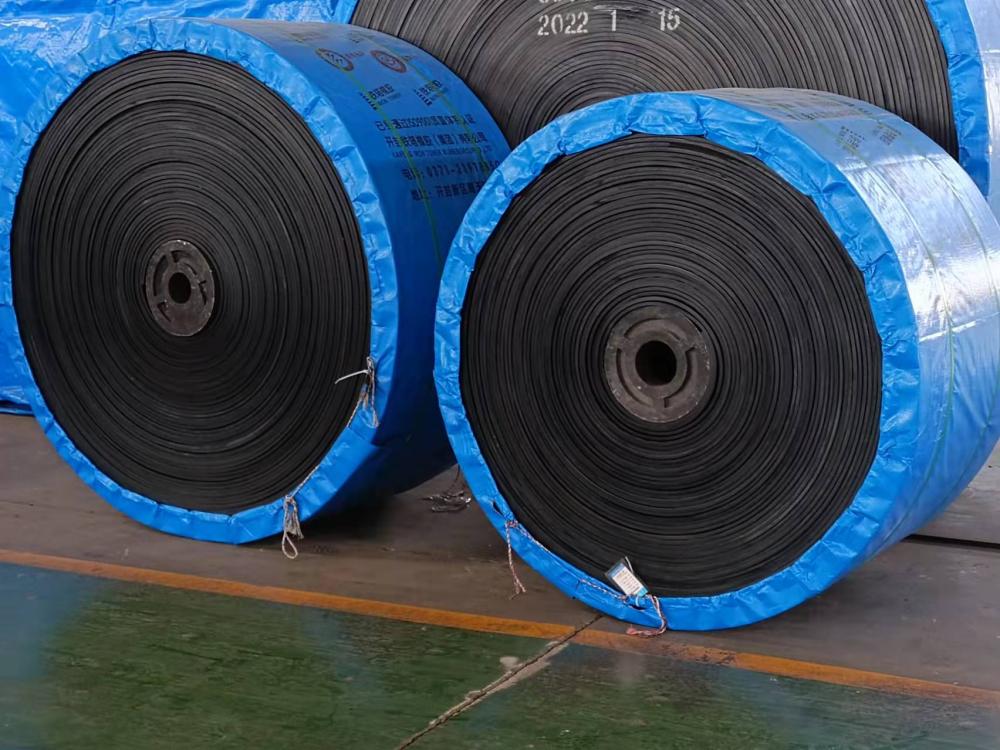


1. Product Overview
EP Conveyor Belts are industrial rubber belts reinforced with polyester (warp) and polyamide/nylon (weft) fabric plies. "EP" denotes:
E: Polyester (high tensile strength, low elongation)
P: Polyamide/Nylon (high flexibility, impact resistance)
This hybrid construction delivers superior performance for bulk material handling across mining, ports, power plants, and more.
2. Structure & Key Features
(a) Reinforcement (Carcass)
Warp Direction (Longitudinal): Polyester fibers provide high tensile strength and minimal permanent elongation (≈1/4 of NN belts), ensuring stability under heavy loads.
Weft Direction (Transverse): Nylon fibers offer excellent impact resistance, tear strength, and troughability (up to 35°–45°), ideal for sharp/abrasive materials.
Inter-ply Bonding: Specialty adhesive ensures strong inter-layer cohesion.
(b) Cover Rubber
Top Cover: Customizable thickness (3–12 mm) and compound (e.g., abrasion-resistant, heat-resistant, oil-resistant) to protect against wear/impact.
Bottom Cover: Thinner (1.5–4.5 mm), optimized for friction resistance with idlers.
Edge Protection: Optional sidewall rubber to prevent edge damage.
3. Performance Advantages
| Feature | Benefit |
| High Strength | Handles long-distance, high-tension conveying (EP100–EP3000+ grades). |
| Low Elongation | Minimal stretch reduces re-tensioning frequency. |
| Impact Resistance | Withstands heavy/irregular loads (e.g., ores, rocks). |
| Flexibility | Excellent troughability for higher load capacity & reduced spillage. |
| Durability | Resists fatigue, abrasion, and tearing in harsh environments. |
| Cost Efficiency | Longer service life vs. NN/CC belts in most applications. |
4. Applications
EP belts are ideal for:
Mining: Coal, iron ore, aggregates.
Ports: Ship loading/unloading of bulk cargo.
Power Plants: Coal handling systems.
Cement/Steel: Raw materials, clinker, sinter.
Agriculture: Grain, fertilizer transport.
Chemical: Salt, sulfur, industrial powders.
5. Technical Specifications
| Parameter | Range/Customization Options |
| Width | 300–3200 mm (custom widths available) |
| Strength Grade | EP100 to EP3000+ (N/mm) |
| Ply Layers | 1–10 layers |
| Top Cover | 3.0/4.5/6.0/8.0/10.0/12.0 mm (standard) |
| Bottom Cover | 1.5/2.0/3.0/4.5 mm (standard) |
| Temperature | -50°C to +150°C (special compounds available) |
| Safety | Fire-resistant (DIN/EN/AS/MSHA), antistatic, oil-resistant |
6. Selection Guide
Consider these factors when specifying an EP belt:
Material properties (abrasiveness, size, temperature, chemical exposure).
Conveyor design (length, incline, belt speed, pulley diameter).
Environmental conditions (moisture, oils, UV exposure).
Safety certifications (e.g., MSHA for mines, ATEX for explosives).
7. Why Choose EP Belts?
EP Conveyor Belts deliver optimal strength-to-weight ratio, energy efficiency (low elongation = reduced drive power), and versatility across industries. They are the global standard for heavy-duty bulk material handling.
For technical datasheets, sample requests, or application-specific solutions, contact our engineering team!
(Custom formulations available for extreme temperatures, oils, chemicals, and fire safety.)
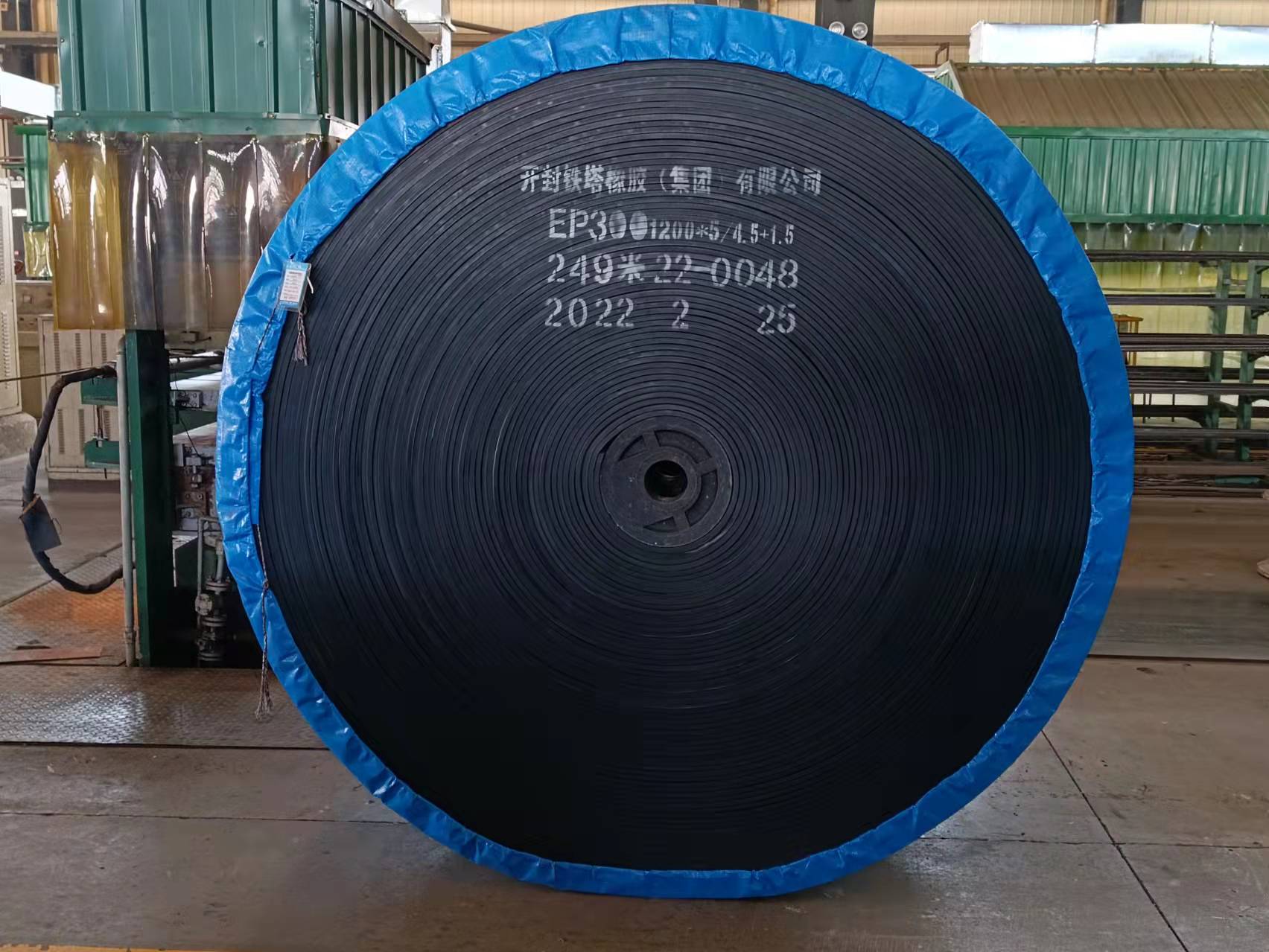
Polyester (EP) Conveyor Belt
