Model No.: TT-C006
Processing Service: Moulding, Cutting
Transportation: Ocean,Land
EP Abrasion-Resistant
Conveyor Belt for Longevity – Engineered for High-Temperature Industrial Applications This premium polyester (EP)
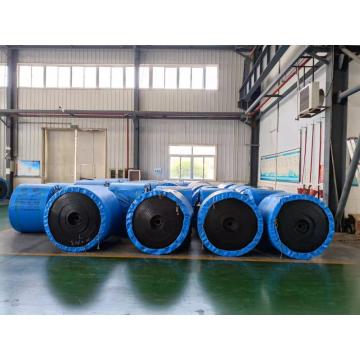
Fabric Cord Conveyor Belt is specifically designed to deliver exceptional durability, heat resistance, and operational stability in demanding industrial environments. Ideal for transporting high-temperature materials such as sintered ore, coke, cement clinker, and hot metal fragments, this robust belt ensures reliable performance under extreme thermal conditions—up to 800°C for the conveyed material and 220°C for the belt surface. Whether you're managing continuous operations in steel mills, power plants, or chemical processing facilities, this belt offers a long service life with minimal maintenance. Key Features: - Advanced EP (Polyester) carcass provides superior tensile strength, low elongation, and excellent dimensional stability - Enhanced abrasion resistance reduces wear from abrasive materials like iron ore, coal, and limestone - Heat-stable rubber compounds allow safe operation at elevated temperatures up to 600°C short-term - Optimized layer structure improves fatigue resistance, making it ideal for high-speed and heavy-duty applications - Low shrinkage properties maintain consistent belt tension over time, reducing downtime and replacement costs Detailed Description: Manufactured using advanced textile engineering techniques, this conveyor belt combines a high-modulus polyester fabric core with heat-resistant top and bottom cover layers. The EP cord construction delivers excellent impact absorption and flexibility, allowing smooth routing around pulleys and idlers without premature cracking or delamination. Available in five temperature-rated variants—T1 through T5—the belt can be precisely matched to your process requirements. Type I (T1) suits moderate heat applications up to 150°C, while Type V (T5) handles extreme temperatures up to 600°C, offering unmatched versatility across industries. Unlike cotton or nylon alternatives, EP belts provide better creep resistance, improved energy efficiency, and extended service intervals—making them a cost-effective choice for long-haul and high-capacity conveying systems. Ideal Use Cases: Perfect for metallurgical plants, cement kilns, incinerators, and thermal power stations where consistent, uninterrupted material flow is critical. These belts are commonly used in bulk handling of hot raw materials, including ferrous and non-ferrous ores, calcined minerals, and furnace slag. Their ability to resist both mechanical stress and thermal degradation makes them suitable for continuous operation in harsh environments where conventional belts would fail prematurely. Customer Feedback: Users consistently praise the belt’s resilience in high-heat zones, noting fewer splice failures and reduced belt slippage compared to older models. One operator from a European steel mill remarked, “After switching to this EP-based system, our maintenance cycle doubled, and we saw a significant drop in unplanned shutdowns.” Another user in the mining sector highlighted its ease of installation and compatibility with existing conveyor infrastructure, emphasizing how the belt’s lightweight design minimizes strain on drive units. Frequently Asked Questions: What distinguishes an
EP Conveyor Belt from other types? EP belts offer higher tensile modulus and lower elongation than cotton or nylon counterparts, resulting in better load distribution and longer lifespan under dynamic stress. How do I choose the right temperature rating for my application? Match the belt type (T1–T5) to the maximum expected operating temperature of your material and ambient environment. Always consult the manufacturer’s guidelines for precise specifications. Can this belt handle abrasive substances without rapid wear? Yes, thanks to its reinforced abrasion-resistant cover compound, which significantly extends service life when conveying gritty or sharp materials like crushed stone or coke. Is it suitable for high-speed conveyors? Absolutely—it maintains structural integrity at speeds exceeding 3 meters per second, making it ideal for automated and high-throughput material handling systems.










 Contact Now