Model No.: TT-I004
Brand: TieTa Rubber
Origin: KaiFeng He Nan China
Certification: ISO9001,Conformité Européene
Silicone Rubber (VMQ)/Fluororubber (FKM): Temperature resistance range *-50 ℃~+300 ℃
Multi Layer Composite Vulcanization Proc: PTFE non stick coating or anti slip ridges
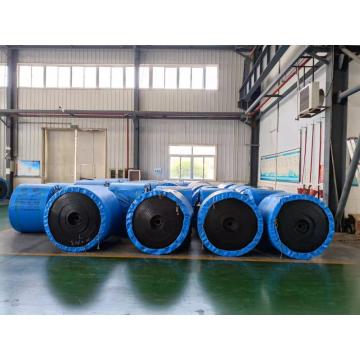
Packaging: Roll packaging,Wooden crate/wooden frame packaging,Palletizing,Special environmental packaging,Bare packaging and simple packaging
Productivity: Month supply capacity of 50000
Transportation: Ocean,Land
Place of Origin: KaiFeng He Nan China
Supply Ability: 500000/㎡
Certificate: ISO9001,Conformité Européene
HS Code: 4010120000
Port: Qing Dao Port,Tian Jin Port,Ning Bo Port
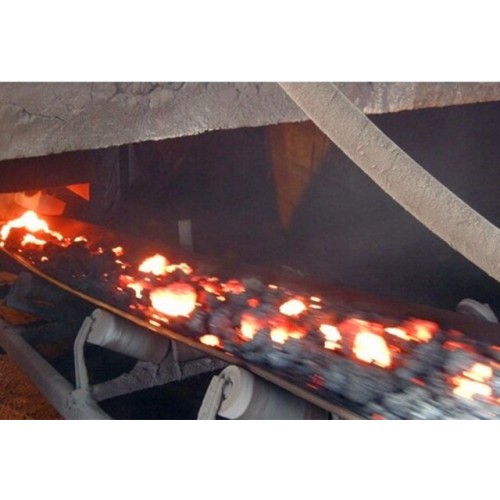
Heat Resistant Conveyor Belt for Mining Applications – High-Performance, Durable Solutions for Harsh Environments This advanced heat-resistant
Conveyor Belt is specifically engineered for demanding mining operations where high temperatures, heavy loads, and continuous operation are the norm. Designed with superior thermal stability and mechanical strength, it ensures reliable material transport across long distances without compromising safety or efficiency. Whether handling hot ores, fine powders, or abrasive aggregates, this belt delivers consistent performance under extreme conditions. Key Features: - Exceptional resistance to elevated temperatures (up to 150°C or higher depending on rubber compound) - Enhanced tensile strength from polyester (EP) fabric carcass for minimal elongation - Superior impact absorption and abrasion resistance for extended service life - Excellent groove-forming ability for smooth tracking on pulleys and idlers - Low shrinkage and high dimensional stability even in fluctuating environmental conditions - Customizable rubber compounds tailored for oil resistance, chemical exposure, or anti-static requirements Detailed Description: The belt utilizes a reinforced polyester cord structure—also known as EP fabric—to provide outstanding modulus and resilience. Unlike traditional cotton canvas belts that degrade quickly under thermal stress, this model maintains structural integrity at high operating temperatures. The top cover rubber is formulated for heat resistance, while the bottom layer offers excellent wear resistance against sharp particles commonly found in mining environments. This dual-layer protection system significantly reduces maintenance costs and downtime. Additionally, the belt’s flexibility allows for tight-radius turns, making it ideal for installations with space constraints or complex routing needs. Ideal Use Cases: This conveyor belt is widely used in coal mines, metal ore processing plants, cement factories, and other industrial settings where materials must be transported over medium to long distances at high speeds. It excels in applications involving hot materials such as clinker, slag, or sintered iron ore, where standard belts would fail prematurely due to thermal degradation. Its robust design supports both intermittent and continuous operation, ensuring uninterrupted production flow. User Feedback: Operators report improved belt lifespan compared to conventional models, especially in high-temperature zones. Maintenance teams appreciate the reduced need for frequent replacements and the belt’s ability to maintain alignment without excessive tension adjustments. Many users also highlight its compatibility with existing conveyor systems, allowing for seamless integration without major infrastructure changes. Frequently Asked Questions: What makes this belt different from standard mining conveyors? It features a specialized heat-stable rubber formulation combined with a polyester carcass that resists thermal expansion and mechanical fatigue better than cotton or nylon alternatives. Can it handle acidic or alkaline materials? Yes, custom formulations are available for acid- and alkali-resistant applications, offering protection against corrosive substances often present in mineral processing. Is it suitable for cold climates? While primarily designed for high-temperature environments, certain variants include cold-resistance properties for year-round usability in varying weather conditions. How does it perform under heavy-duty loads? With a high tensile strength-to-weight ratio, it efficiently carries large volumes of material without sagging or misalignment, even during peak operational hours.










 Contact Now