Model No.: TT-B005
Brand: TieTa Rubber
Origin: China
Certification: ISO9001 Conformité Européenne
Place Of Origin: China
Processing Service: Moulding, Cutting
High Tensile Strength: Excellent Abrasion Resistance
High Impact Resistance: Good Flexibility & Troughability
Packaging: Roll packaging,Wooden crate/wooden frame packaging,Palletizing,Special environmental packaging,Bare
Productivity: Month supply capacity of 50000
Transportation: Ocean,Land
Place of Origin: China
Supply Ability: 500000/㎡
Certificate: ISO9001 Conformité Européenne
HS Code: 40101100
Port: Qing Dao Port,Tian Jin Port,Ning bo Port
Nylon 300
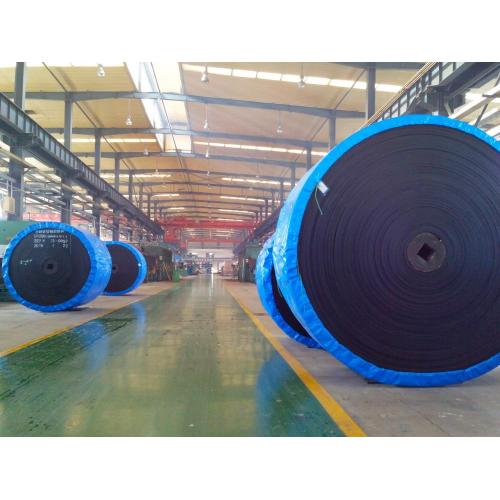
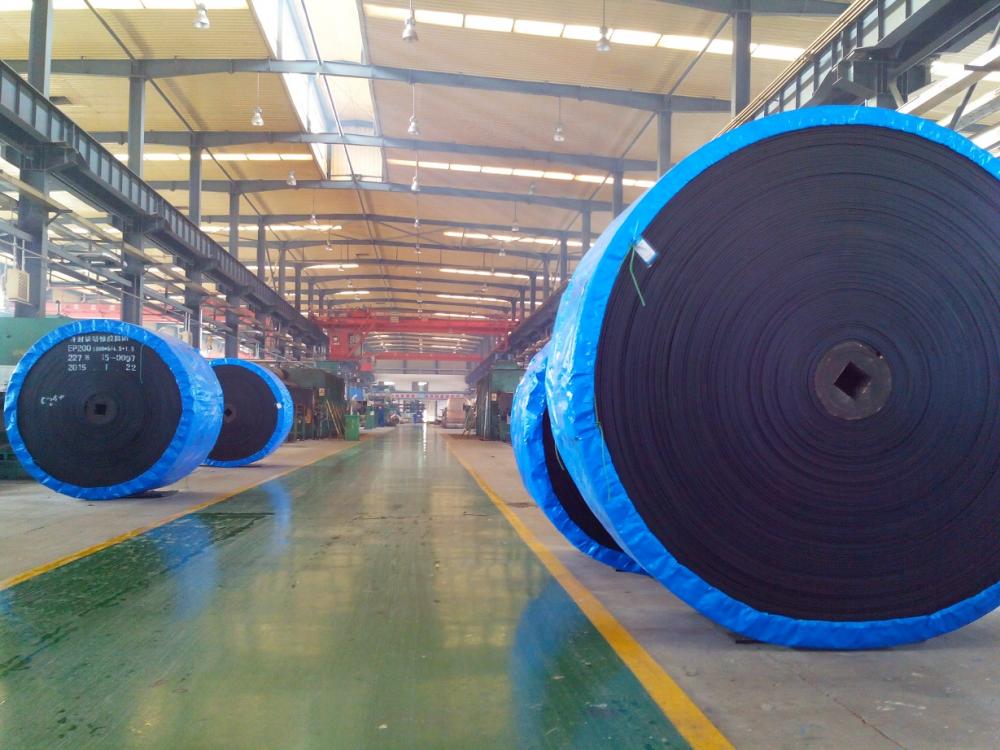
Conveyor Belt – High-Performance Industrial Solution for Heavy-Duty Material Handling This premium nylon-based conveyor belt is engineered for demanding industrial environments where durability, load capacity, and consistent performance are critical. Designed with advanced rubber compounds and reinforced cord layers, the Nylon 300 model delivers exceptional tensile strength, minimal elongation under tension, and superior resistance to abrasion, impact, and temperature variations. Ideal for medium to long-distance transport of bulk materials at high speeds, it ensures reliable operation in manufacturing, mining, logistics, and processing facilities worldwide. Key Features: - Exceptional elasticity and flexibility for smooth operation on curved or troughed pulleys - Low stretch during service life, maintaining alignment and reducing maintenance needs - Enhanced adhesion between layers for improved longevity and reduced delamination - Robust construction using durable rubber compounds and polyester/nylon cord reinforcement - Engineered for continuous duty cycles under heavy loads without premature wear Detailed Description: The Nylon 300 conveyor belt features a multi-layer structure optimized for industrial efficiency. Its base consists of a resilient rubber compound formulated to withstand harsh conditions—such as friction from abrasive materials, exposure to oils, and fluctuating temperatures. The internal reinforcement layer employs tightly woven cords made from high-strength synthetic fibers like nylon or polyester, which distribute stress evenly across the belt’s surface. This design prevents localized strain, minimizes sagging, and supports sustained throughput even under peak loads. Unlike conventional belts that experience significant elongation over time, this model maintains dimensional stability, ensuring accurate material positioning and reduced downtime for adjustments or replacements. The cover properties also contribute to its resilience—offering excellent grip for materials like grains, ores, plastics, and packaged goods while resisting cuts, tears, and environmental degradation. Applications: Commonly deployed in automotive assembly lines, food processing plants, cement production units, and mining operations, the Nylon 300 belt excels in both fixed and mobile conveyance systems. It’s particularly effective in scenarios requiring high-speed movement of heavy payloads over extended distances—such as transporting raw ore from extraction points to crushers, moving finished components between workstations, or managing palletized inventory in automated warehouses. Its versatility makes it suitable for industries seeking robust, low-maintenance solutions that reduce operational costs and increase productivity. User Feedback: Operators in global manufacturing sectors consistently praise the belt’s reliability and ease of integration into existing systems. Users report fewer breakdowns compared to traditional belts, especially when handling sharp-edged or dense materials. Many highlight its ability to maintain consistent speed and alignment over months of continuous use—a key factor in optimizing workflow continuity and minimizing labor-intensive inspections. Frequently Asked Questions: What distinguishes this belt from standard rubber belts? It offers higher tensile strength, lower elongation, and better thermal stability due to its specialized nylon-reinforced core and advanced rubber formulation. Is it suitable for outdoor installations? Yes, the belt is resistant to UV radiation and moisture, making it appropriate for shaded or partially exposed outdoor applications. How often should maintenance be performed? Routine checks every 2–4 weeks are recommended to inspect tension, alignment, and surface wear—though many users report extended intervals due to the belt’s durability. Can it handle sharp or irregularly shaped objects? Yes, thanks to its tough outer layer and flexible yet strong internal structure, it safely transports items such as metal scraps, stones, or molded parts without damage.










 Contact Now