Model No.: TT-I003
Brand: TieTa Rubber
Origin: KaiFeng He Nan China
Certification: ISO9001,Conformité Européene
Silicone Rubber (VMQ)/Fluororubber (FKM): Temperature resistance range *-50 ℃~+300 ℃
Multi Layer Composite Vulcanization Proc: PTFE non stick coating or anti slip ridges
Packaging: Roll packaging,Wooden crate/wooden frame packaging,Palletizing,Special environmental packaging,Bare packaging and simple packaging
Productivity: Month supply capacity of 50000
Transportation: Ocean,Land
Place of Origin: KaiFeng He Nan China
Supply Ability: 500000/㎡
Certificate: ISO9001,Conformité Européene
HS Code: 4010120000
Port: Qing Dao Port,Tian Jin Port,Ning Bo Port
High Adhesion and Heat Resistant
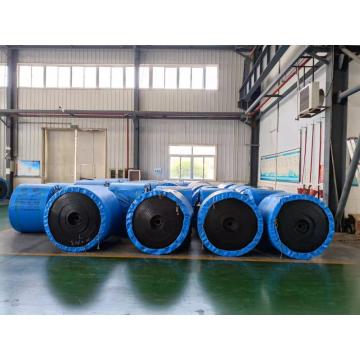
EP Conveyor Belt – Durable, Stable, and Efficient for Industrial Material Handling This premium
Polyester (EP) Conveyor Belt is engineered for demanding environments where strength, thermal resistance, and long-term reliability are critical. Designed with a high-tensile polyester fabric carcass, it delivers superior performance in heavy-duty applications such as cement production, brick manufacturing, and high-temperature material transport. Its robust construction ensures consistent operation under extreme loads and elevated temperatures, making it an ideal solution for industrial automation systems requiring precision and durability. Key Features: - Exceptional tensile strength to resist elongation and maintain alignment during extended conveying operations - Low elongation characteristics for dimensional stability and accurate positioning in automated lines - Excellent impact absorption to handle falling or heavy materials without damage - Enhanced heat resistance to perform reliably when transporting hot substances like clinker or fired bricks - High adhesion properties that improve grip and reduce slippage on rollers and pulleys Detailed Description: The core of this
Conveyor Belt is built using a high-modulus polyester cord fabric, which provides outstanding mechanical resilience. Unlike standard rubber belts that may stretch or degrade under prolonged stress, the EP structure maintains its shape and tension even when exposed to continuous high loads—such as those encountered during the movement of cement clinker in kiln discharge systems. The low elongation rate minimizes sagging and misalignment over time, ensuring smooth integration into modern conveyor networks where timing and spacing matter. Additionally, the belt’s surface treatment enhances friction between the belt and conveyed goods, reducing the risk of material slippage—a common issue in dusty or uneven loading conditions. Whether you're moving crushed stone, refractory bricks, or hot metal components, this belt offers dependable service life and reduced downtime. Ideal Use Cases: This industrial-grade conveyor system excels in settings where material consistency, temperature control, and mechanical integrity are essential. It's commonly used in cement plants for clinker conveyance, in ceramic and brick factories for handling fired products, and in mining operations involving abrasive or irregularly shaped materials. It also supports food processing facilities that require clean, non-contaminating surfaces with minimal maintenance needs. Because of its chemical resistance and ability to operate at temperatures up to 120°C (248°F), it serves well across diverse sectors including metallurgy, recycling, and logistics. User Feedback: Operators from leading manufacturers report improved throughput efficiency and fewer belt failures after switching to this EP belt. One user noted that “the reduced stretching allowed us to fine-tune our robotic sorting line without constant recalibration.” Another praised its resilience in high-impact scenarios, stating, “We load large clay bricks directly onto the belt from overhead hoppers—it doesn’t tear or develop cracks despite daily use.” Frequently Asked Questions: What makes this conveyor belt different from traditional rubber belts? It uses a polyester carcass instead of cotton or nylon, offering higher tensile strength, better heat tolerance, and less deformation under load. Can it be used in outdoor environments? Yes, with proper installation and protective covers, it performs reliably in both indoor and outdoor settings, especially when exposed to fluctuating temperatures. How often should I inspect the belt for wear? Routine checks every 3–6 months are recommended, depending on usage intensity and environmental conditions. Look for signs of surface cracking, edge fraying, or misalignment. Is it compatible with existing conveyor systems? Most standard conveyor frames can accommodate this belt type, provided they support the required width and tension specifications. Always verify with your equipment manufacturer before installation. This high-performance EP conveyor belt combines engineering excellence with real-world adaptability, delivering unmatched value for global industries seeking durable, low-maintenance solutions for their bulk material handling challenges.










 Contact Now