Model No.: TT-I005
Brand: TieTa Rubber
Origin: KaiFeng He Nan China
Certification: ISO9001,Conformité Européene
Silicone Rubber (VMQ)/Fluororubber (FKM): Temperature resistance range *-50 ℃~+300 ℃
Multi Layer Composite Vulcanization Proc: PTFE non stick coating or anti slip ridges
Packaging: Roll packaging,Wooden crate/wooden frame packaging,Palletizing,Special environmental packaging,Bare packaging and simple packaging
Productivity: Month supply capacity of 50000
Transportation: Ocean,Land
Place of Origin: KaiFeng He Nan China
Supply Ability: 500000/㎡
Certificate: ISO9001,Conformité Européene
HS Code: 4010120000
Port: Qing Dao Port,Tian Jin Port,Ning Bo Port
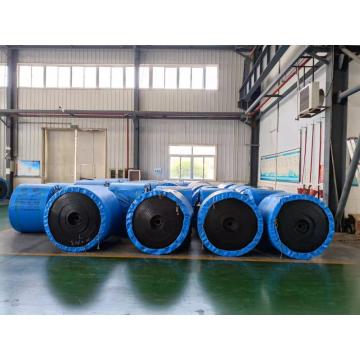
EP1200/5 Heat Resistant Rubber
Conveyor Belt – Premium Performance for High-Temperature Industrial Applications Engineered for durability and reliability in extreme conditions, the EP1200/5 Heat Resistant Rubber Conveyor Belt is a high-performance solution designed to withstand continuous exposure to elevated temperatures while maintaining structural integrity and operational efficiency. Ideal for demanding environments such as cement kilns, steel processing plants, and thermal treatment facilities, this belt combines advanced materials with robust construction to deliver long-term performance under harsh industrial conditions. This conveyor belt features a multi-layered structure optimized for heat resistance, strength, and longevity. The outer cover layer is composed of premium-grade EPDM rubber or silicone-based compounds, known for their exceptional thermal stability, chemical inertness, and resistance to abrasion. These materials ensure consistent performance even when exposed to sustained temperatures up to 150°C (302°F) or higher, depending on specific configurations. Unlike standard belts that degrade quickly under thermal stress, the EP1200/5 maintains flexibility, elasticity, and surface integrity over extended periods. The internal framework consists of high-tensile strength fabric cords—such as polyester-cotton blends (CC56), EP fabrics (EP100, EP150, EP200), or nylon canvas—providing superior tensile strength and dimensional stability. This skeleton layer prevents elongation, reduces fatigue, and ensures reliable operation under heavy loads and dynamic tension. In some models, an intermediate reinforcement layer enhances bonding between plies and improves electrical insulation properties, making it suitable for applications where thermal and mechanical stresses are compounded by environmental factors like moisture or acidic substances. Key advantages include outstanding wear resistance, corrosion resilience, and anti-aging characteristics. Whether handling hot raw materials, abrasive particles, or chemically aggressive substances, the EP1200/5 minimizes surface degradation and extends service life significantly compared to conventional alternatives. Its ability to resist cracking, hardening, and delamination ensures consistent performance across varying temperature cycles—an essential feature for industries requiring uninterrupted production. Designed for use in continuous-duty systems, this heat-resistant conveyor belt excels in applications involving high-temperature conveying, such as kiln discharge lines, incinerators, drying ovens, and metal smelting operations. It supports both short-distance and long-span installations, accommodating diverse material types including aggregates, minerals, ceramics, and recycled products. Proper selection based on operating temperature, load capacity, belt speed, and environmental conditions is critical to maximizing lifespan and minimizing maintenance downtime. Users consistently report improved uptime, reduced replacement frequency, and enhanced safety due to the belt’s stable behavior at elevated temperatures. Many industrial operators appreciate its compatibility with existing conveyor systems and ease of integration without major retrofitting. Feedback highlights its ability to maintain flatness, reduce slippage, and perform reliably in environments where traditional belts fail prematurely. Common questions often revolve around optimal temperature ranges, installation guidelines, and compatibility with different material types. While the belt performs best within specified thermal limits, exceeding recommended temperatures may compromise performance. For maximum efficiency, users should conduct thorough assessments of belt surface temperatures during actual operation to ensure alignment with design parameters. Additionally, proper tensioning, pulley alignment, and regular inspection contribute to extending the product's effective life. In summary, the EP1200/5 Heat Resistant Rubber Conveyor Belt represents a smart investment for any facility seeking dependable, low-maintenance material transport solutions in high-heat settings. With its blend of engineered materials, proven engineering principles, and real-world adaptability, it stands out as a top choice among professionals worldwide who prioritize safety, durability, and productivity.










 Contact Now