Model No.: TT-G001
Brand: TieTa Rubber
Origin: KaiFeng He Nan China
Certification: ISO9001,Conformité Européene
Corrosion Resistant Material Combination: chemical resistance
Anti-seepage Structure: Adaptability to working conditions
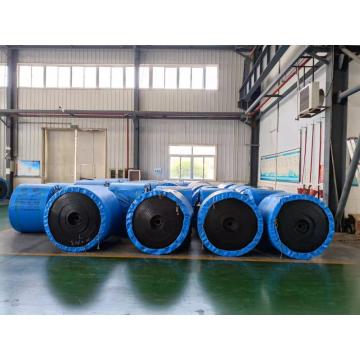
Packaging: Roll packaging,Wooden crate/wooden frame packaging,Palletizing,Special environmental packaging,Bare packaging and simple packaging
Productivity: Month supply capacity of 50000
Transportation: Ocean,Land
Place of Origin: KaiFeng He Nan China
Supply Ability: 500000/㎡
Certificate: ISO9001,Conformité Européene
HS Code: 4010110000
Port: Qing Dao Port ,Tian Jin Port,Ning Bo Port
Engineered for durability in chemically aggressive conditions, this industrial Conveyor Belt is specifically designed to withstand prolonged exposure to acids, alkalis, and corrosive substances commonly found in chemical processing, mining, and wastewater treatment facilities. Unlike standard belts that degrade quickly under such stress, our solution offers exceptional resistance to pH extremes while maintaining consistent performance across diverse operational settings. The core structure utilizes high-performance fabric cords made from materials like polyester (EP), nylon, or cotton canvas—each selected based on the specific demands of the application. Polyester-based cords provide superior tensile strength and dimensional stability, ensuring minimal elongation even under heavy loads or fluctuating temperatures. Nylon cords offer excellent abrasion resistance and flexibility, ideal for moderate-duty operations requiring frequent movement. Cotton canvas remains a cost-effective choice for lighter applications where softness and basic resilience are sufficient.
The outer cover layer is crafted from advanced rubber-plastic composite blends, primarily incorporating nitrile rubber and polyvinyl chloride (PVC). These formulations are reinforced with inert fillers that enhance chemical inertness, making them more resistant to sulfuric acid, hydrochloric acid, sodium hydroxide, and other common industrial chemicals than traditional chloroprene rubber. This composition not only resists degradation but also maintains mechanical integrity—such as tensile strength, impact resistance, and flex fatigue life—over extended periods in hostile environments.
This acid and alkali resistant conveyor belt excels in industries where material integrity and safety are critical. Whether transporting corrosive slurries, handling caustic chemicals, or moving mineral concentrates in mining operations, it ensures reliable operation without premature wear or failure. Its robust construction supports continuous use in high-moisture, high-temperature, or acidic atmospheres, reducing downtime and maintenance costs associated with belt replacement.
Users report long-term reliability when deployed in chemical manufacturing plants, electroplating facilities, and pulp and paper mills. Many have noted significant improvements in system uptime compared to conventional belts, especially in applications involving repeated contact with alkaline solutions or acidic effluents. The belt’s ability to resist swelling, cracking, or delamination after prolonged exposure makes it a preferred choice among facility managers seeking sustainable, low-maintenance solutions.
Common inquiries include how this belt compares to EP (polyester) belts used in general-purpose conveyors—it's important to note that while both share similar core structures, the acid and alkali resistant version includes specialized compounds tailored for chemical resistance. Another frequently asked question concerns temperature tolerance: these belts typically perform effectively between -20°C and +80°C, depending on the exact formulation. Proper installation and regular inspection remain key to maximizing service life, especially in environments with abrasive or unevenly distributed loads.










 Contact Now